
Criminal Cases in DeKalb County Courts
The DeKalb County Circuit Clerk maintains the filed case and docket for the Circuit Court of the Twenty-Third Judicial Circuit. DeKalb and Kendall Counties form that circuit, but DeKalb prosecutions stay in the DeKalb court file. Illinois does not divide local crimes among separate district, county, and municipal criminal courts. Felonies and misdemeanors, as well as DUI, traffic, ordinance, and conservation cases, all can enter the circuit system.
The clerk is the right custodian for complaints, informations, indictments after filing, motions, orders, hearing entries, dispositions, sentences, and financial assessments. A sheriff report may explain an arrest, but it cannot certify what the State's Attorney later charged. Likewise, grand-jury deliberations remain secret even when the resulting indictment becomes a filed case document.
DeKalb Criminal Counter in Sycamore
The first-floor criminal and traffic counter is at the DeKalb County Courthouse, 133 West State Street, Sycamore, Illinois 60178. It is open Monday through Friday from 8:30 a.m. to 4:30 p.m., excluding court holidays. Call 815-895-7138 or email dekalbcircuitclerk@dekalbcounty.org with a case number and a focused question. The north entrance is accessible, and an elevator reaches all levels.
Circuit Clerk Criminal Counter
133 West State Street
Sycamore, IL 60178
815-895-7138
Monday-Friday, 8:30 a.m.-4:30 p.m.
Use the counter for inspection, older material, certified copies, or an attachment that the online view does not provide. The first-floor Self Help Legal Center can help with form selection and e-filing steps, though it does not give legal advice.
How to Search Case Records
The county's Online Records page opens an embedded Clericus Magnus application. Basic searching is presented without a fee or registration. The interface is dynamic, so its precise labels may change and should not be guessed.
- Open the county Online Records page and allow the embedded application time to load.
- On a phone, rotate to landscape. If the frame still fails, open the direct portal on a desktop.
- Use the controls shown at that time, then confirm the case category and case number.
- Read the charge apart from the disposition. Review event history, orders, sentence, and financial data when shown.
- Call or visit the clerk for a certified copy, an older file, or a document that is not scanned.
| Search element | Type | Required | Verified note |
|---|---|---|---|
| Search interface | Dynamic embedded app | Not stated | County page links the DeKalb endpoint |
| Name or case criteria | Dynamic controls | Not stated | Use only labels visible in the live app |
| Case category | Application control | Not stated | Coverage includes felony, misdemeanor, DUI, traffic, ordinance, and conservation |
| Actions | Dynamic buttons | Not stated | Labels were not reliable in static capture |
Note: A portal result is useful for research, but only the clerk can issue a certified DeKalb County court record.
When DeKalb Court Search Fails
First wait for the embedded frame. Then rotate a mobile screen to landscape, try the direct Clericus Magnus search, or move to a desktop browser. If the record is old, not digitized, or missing an attachment, contact the criminal counter instead of treating a blank screen as proof that no case exists.
The official portal image below comes from the DeKalb Clericus Magnus interface.
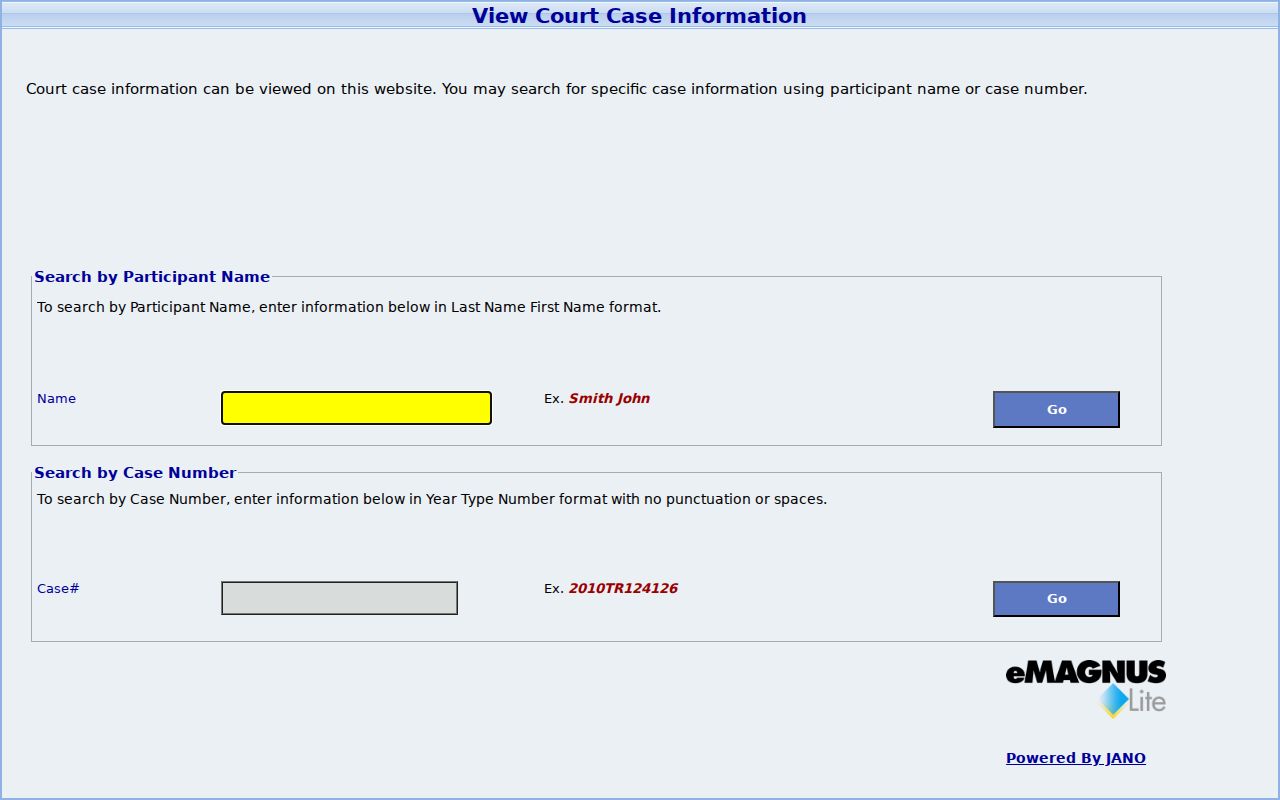
Its framed layout explains why the county warns phone users to choose landscape view and why the clerk counter remains an essential backup.
What the Case File Shows
A DeKalb County criminal case file links a numbered prosecution to the papers and court events that define it. Not every field or document is guaranteed to appear remotely. The inventory below describes common circuit-file content documented by the research, not a promise about each online result.
| Case number and filing | Identifies the circuit case, filing date, and case category. |
|---|---|
| Charging document | Shows the complaint, information, or filed indictment and alleged statutes or classes. |
| Parties and counsel | May identify the People of Illinois, defendant, judge, and attorneys. |
| Docket events | Records appearances, motions, orders, hearings, and other filed activity. |
| Disposition | Separates dismissal, acquittal, supervision, plea, verdict, and conviction. |
| Sentence and money | May show sentence terms, fines, costs, restitution, and payment status. |
The case file is the best source for the filed charge and judgment. The arrest report remains with the arresting agency, while an ISP transcript depends on fingerprint and disposition reporting.
DeKalb Charges Can Change
Intake allegations describe why an officer booked someone. They do not bind the prosecutor. The DeKalb County State's Attorney has exclusive authority to decide which state charges to file or dismiss, so a court charge may be narrower, different, or absent. The office staffs four courtrooms daily and also appears in DeKalb and Sandwich branch court.
Compare the arrest date and agency with the court filing date and case number, then read each charge's final outcome. For the earlier custody event, use the separate DeKalb County arrest history channels. This prevents a booking allegation from being mistaken for a court finding.
- Nolle prosequi
- The prosecutor's formal decision not to proceed.
- Court supervision
- An Illinois outcome that withholds judgment while set conditions are completed; it is not probation.
- Acquittal
- A finding that guilt was not proved.
- Disposition
- The result of a charge, not merely the status of the whole case.
Stages of a Criminal Case
A local prosecution may begin after arrest or notice, but the court record starts when a charging paper is filed. A judge addresses release and later hearings. Motions, discovery, plea talks, or trial can follow. Judgment and sentence are distinct docket events, and post-judgment motions or an appeal may add later entries.
Case flow: Charges Filed › Arraignment › Pretrial › Plea or Trial › Disposition › Sentencing
The State's Attorney controls filing and dismissal. Eligible Drug, DUI, or Mental Health Treatment Court participation creates a specialized path of treatment and intensive judicial supervision, but not a separate record repository. The circuit docket remains the public case trail.
DeKalb Treatment Court Records
The county's Treatment Courts include Drug, DUI, and Mental Health Court. C.L.E.A.N., short for Choosing Life and Ending Abuse Now, has operated since 2006. Mental Health Court policy describes a post-plea, pre-sentencing program for eligible felony conduct directly tied to mental health.
Program participation does not mean there is a second private docket search. Public orders and case events remain with the Circuit Clerk, while treatment, assessment, and supervision working files can contain restricted material. A docket entry should be read as an event in that one case, not as a full clinical or probation file.
The current Drug and DUI Court handbook describes treatment, therapy, training, and compliance expectations. Those program details help explain why a case may show repeated review hearings or supervision orders. They do not establish that every person with a similar charge is eligible. Admission is case-specific, and public docket entries are not a substitute for the program's confidential assessment material.
Access and Restrictions
Illinois remote access is narrower than access at the clerk's counter. The Illinois Supreme Court Remote Access Policy excludes sealed, expunged, impounded, confidential, and juvenile matters from ordinary public viewing. Sensitive identifiers, minor names, and protected-victim information may also be redacted. A missing remote result can reflect restriction, delay, indexing, or digitization limits.
Police and sheriff reports use the Illinois Freedom of Information Act, but judicial files follow court and clerk rules. Do not send a court-document request to Sheriff Records just because an arrest began the matter. For a public case that does not appear, give the clerk a case number, name, filing period, and precise document request. Ask whether inspection or copies are available and whether certification is needed.
Public access does not erase legal limits. Juvenile, sealed, expunged, impounded, and protected records stay outside ordinary DeKalb County remote court searches.